Very bold title, I know, but I just recently re-watched one of my all-time favorite anime shows: Fruits Basket (2019). In my opinion, this is one of the finest stories ever told in a visual medium: romance, humor, the usual amount of anime introspection, life lessons, with a sprinkling of horror and tragedy thrown in. But best of all, it has an amazing ending, one of those “thirty seconds long, and it’s still a better love story than Twilight” moments.
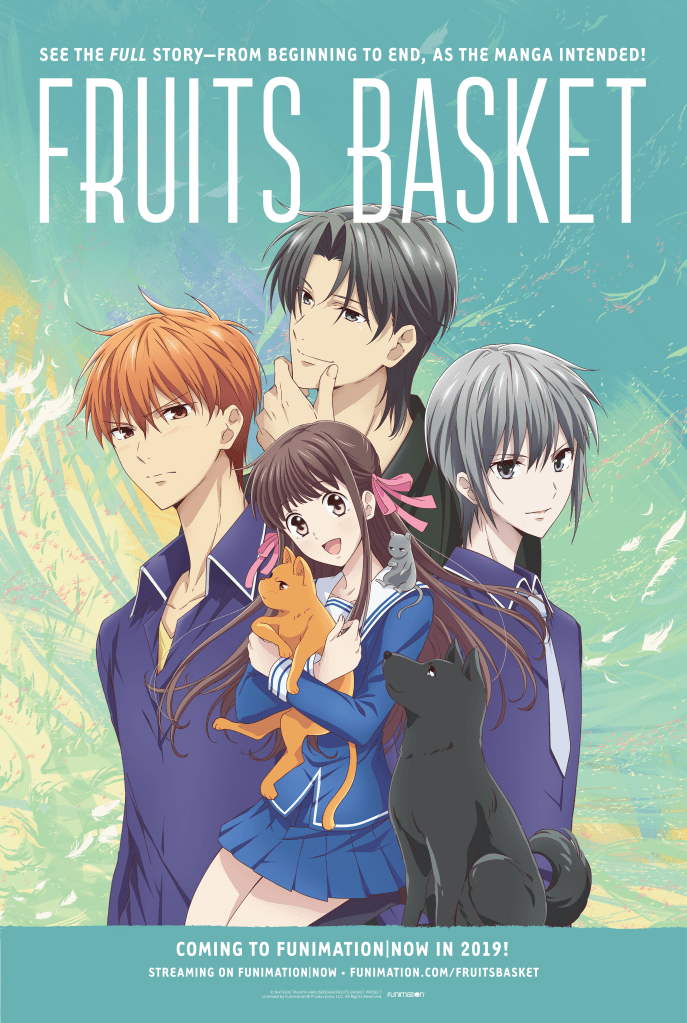
While I was thinking about all of the above (and crying like a baby after the show ended; completely emotionally drained, wow), I realized that somehow, a Japanese artist (who did the original Manga), and then the Japanese animators and show creators, somehow managed to create a story that can be universally applicable. It’s not just an anime; it’s a Catholic story. It’s a modern American story.
Those are the kinds of stories that not only last through time, but can cross cultures and experiences. With all the recent drama going around about “sensitivity readers” and “woke” tendencies in fiction, and persecution of authors who don’t check all the diversity boxes, here is a story that ignores all of that garbage, and tells a story that can reach everyone, not just a few people who checked some boxes.
This analysis will include spoilers, so if you haven’t watched Fruits Basket, do so. It’s available for streaming on Hulu (English dub only) and also on Funimation’s streaming channel.

So, basic plot outline first.

Fruits Basket starts out with Tohru Honda, a girl living alone in a tent because her mother died in an accident, and her grandfather’s house had to be remodeled. Tohru decided that, rather than impose on her two good friends (Saki and Arisa) for a place to stay, she would simply buy a tent and live by herself until the remodel was finished. At this point, she realizes that she’s been living on the Sohma family’s property, and eventually, they catch her. Yuki Sohma (one of Tohru’s classmates) and his cousin, Shigure Sohma, find her and then invite her to stay with them: room and board in exchange for her cooking and cleaning.
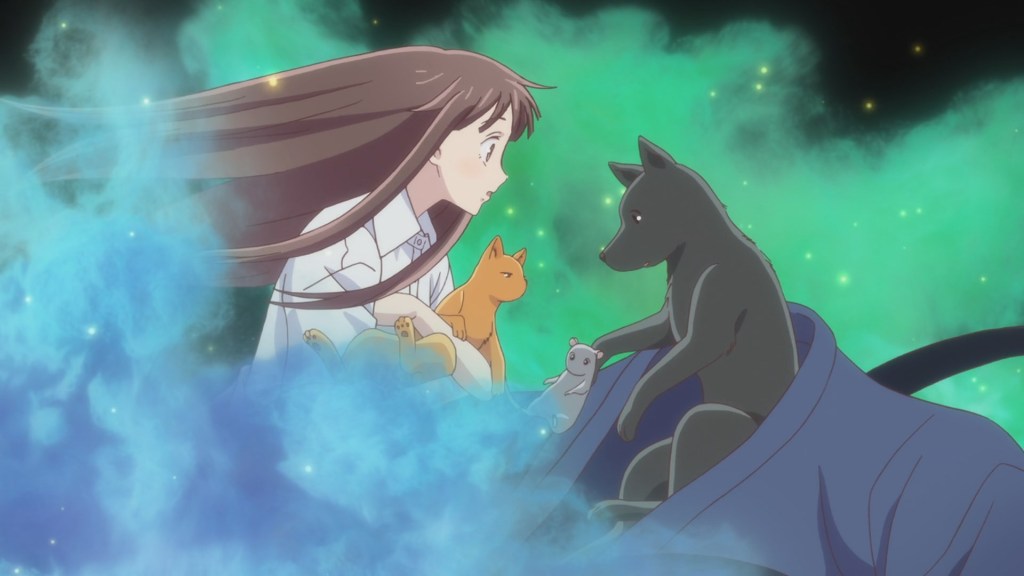
Then, it turns out that the Sohma family is cursed: thirteen of the members of the family are possessed by the animal spirits of the Chinese Zodiac (rat, dog, ox, snake, tiger, sheep, dragon, rooster, boar, monkey, rabbit, horse, then add the cat for thirteen total), and they will turn into those animals if they are either under a lot of physical or emotional stress, or if they’re embraced by a member of the opposite sex.
This is comedy gold, of course, but the point of the show is less about the comedy (Tohru accidentally transforming Yuki into a rat, trying to keep the Sohma family secret, various interactions between the various cursed family members, etc.), and more about how Tohru can break the curse.
The characters are the main driving force in the story, and while they conform to the various “types” that you see in most anime shows, they’re three-dimensional enough to keep it going. It’s not just a bunch of standard anime cliches thrown together with a slim veneer of a plot.

To start, Tohru is almost impossibly loving. She cares for everyone, even people who are cruel to her. In America, we’d say “she’s a saint,” but as this is anime, I’m sure they’d say something else. Fortunately, the original author managed to give her character enough faults (clumsiness, awkwardness, being a bit clueless, etc. In the Japanese version, she uses very formal speech and does it incorrectly, but that’s difficult to get across in the English dub) to keep her from being a complete Mary Sue. In addition, the tragic death of her mother is a major driving force in the story, and not just for Tohru.
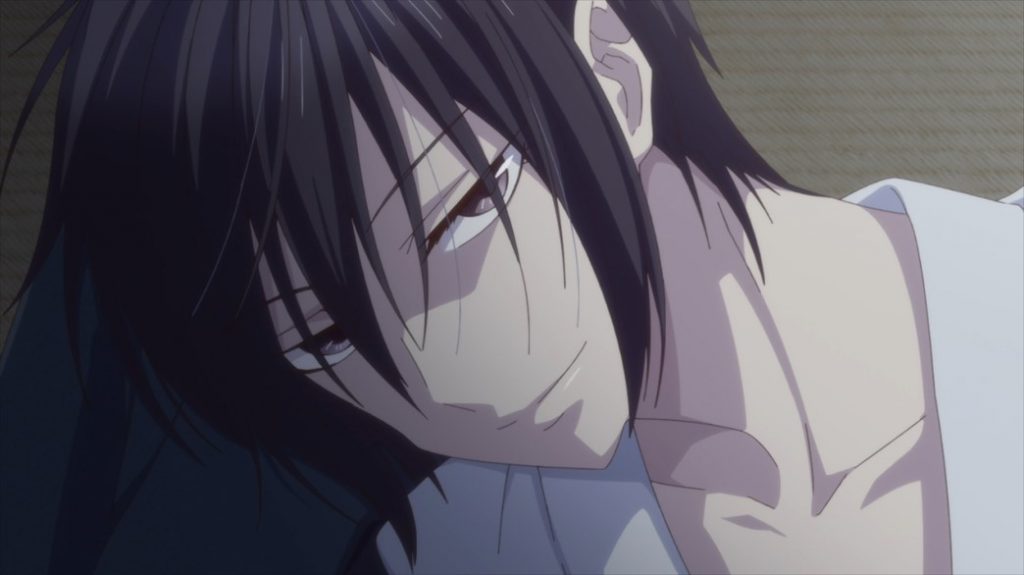
The more members of the family she meets, the more you see that the family curse has a far greater effect on them than just random folks changing into animals. They’re emotionally abused by Akito Sohma, the head of the family (who is not a zodiac animal, but the “god” who invited all the animals to the banquet in the story), and also suffer emotional abuse at the hands of each other and their parents. That, in turn, changes their personalities: some are timid (Kisa the tiger, Ritzu the monkey); some are rebellious (Ayame, the snake); some are angry (Kyo the cat, Isuzu the horse) and so on.
That’s something that can speak to everyone: those emotions are universal, even though the causes for them vary from person to person. And yet, the story is trying to show us how these characters, in spite of all their baggage and drama, try to overcome their own faults. That’s a valuable lesson.
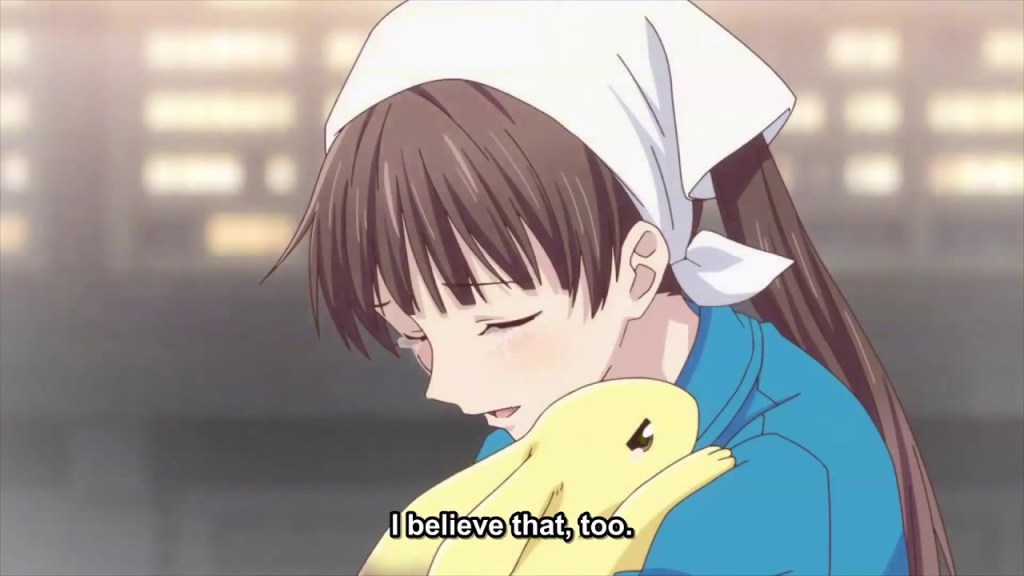
For one gut-wrenching example, Momiji, the rabbit, had his mother reject him completely. She was so disgusted about her child turning into a rabbit that she became self-destructive, suicidal, and eventually had her memories about Momiji erased, so that she could get better. She knows that Momiji is a member of the Sohma family, but doesn’t know exactly who he is. The episode where you hear Momiji tell Tohru all about it is one of the most devastating of all the episodes. He tells her that “I don’t want to forget anything. Even the bad memories are worth keeping, because someday, I’ll be strong enough to look at them” (I paraphrase, of course). Meanwhile, the images on the screen are Tohru remembering the day her mother died, how she was kneeling beside her mother’s hospital bed, crying (crap, I’m tearing up just thinking about it).
Momiji could have turned into a horrible child, either a rebellious angry one, a self destructive one, or a timid and hopeless one after something like that. But he didn’t. He tried to overcome that horrible part of his past. He didn’t want to let it control him.
That’s a lesson that crosses all cultures: our experiences make us who we are, even the painful ones. So, we can’t reject just that part of ourselves and our history. In addition, it’s a very Catholic attitude: our suffering has merit. We’re not supposed to wallow in it; we’re supposed to endure it and emerge victorious, for the sake of our souls.
The best way to present any kind of “message” in fiction is to do it so subtly that we don’t even notice it’s there, and in addition to the above metnioned character development lessons, there’s another good example in the show.

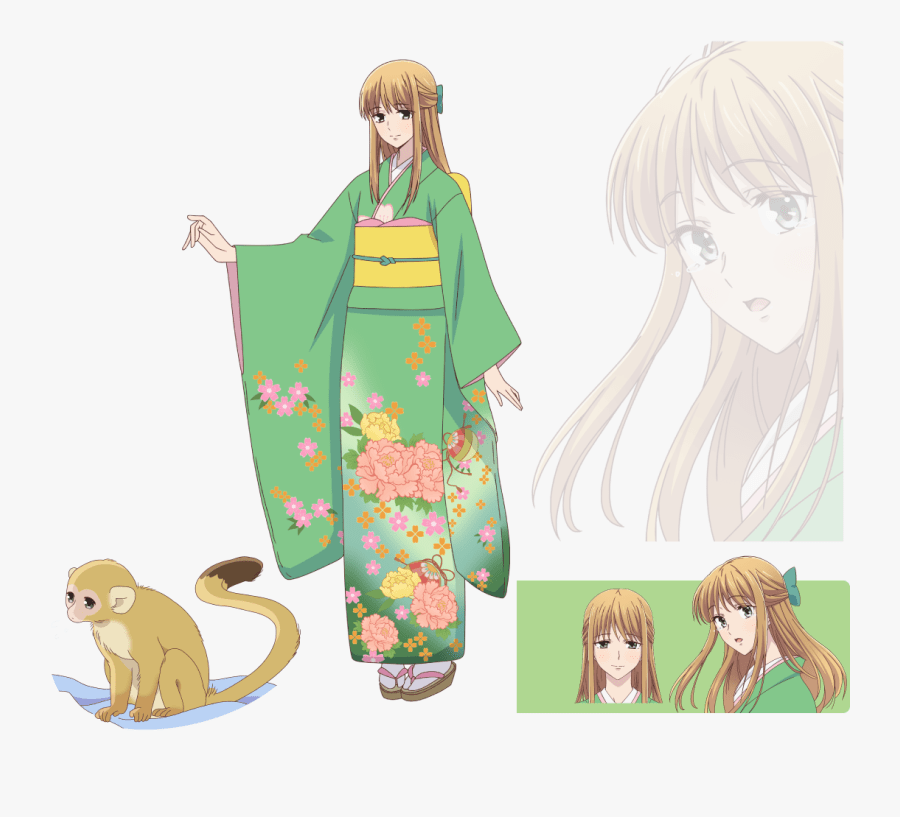
In addition to almost the whole Sohma family having some kind of hang-up, there are a few cross-dressers in there, too, and a lot of Catholic viewers might think “hell, I’m not watching this.” Fortunately, every single one of them is portrayed as an emotionally disturbed person, rather than someone to emulate. The cross-dressing is a symptom of their issues, not just “who they are.” Momiji is a short, blonde kid (his mother is German), and so he wears the girls’ school uniform (shorts, not the skirt) instead of the boys’ uniform because it looks better on him (and in the last season of the show, he gives it up). Ritsu (the monkey) dresses like a woman (full-on kimono and other traditional garb) because he’s so very timid, he discovered that people don’t expect him to be as assertive if they assume he’s a girl. Ayame (the snake, and Yuki’s older brother) runs a clothing shop that is more of a fetish shop, and pretends to be gay just to get a reaction out of people. He was rebelling against anything and everything Sohma-related, and acts like that specifically to spit in his family’s eye.
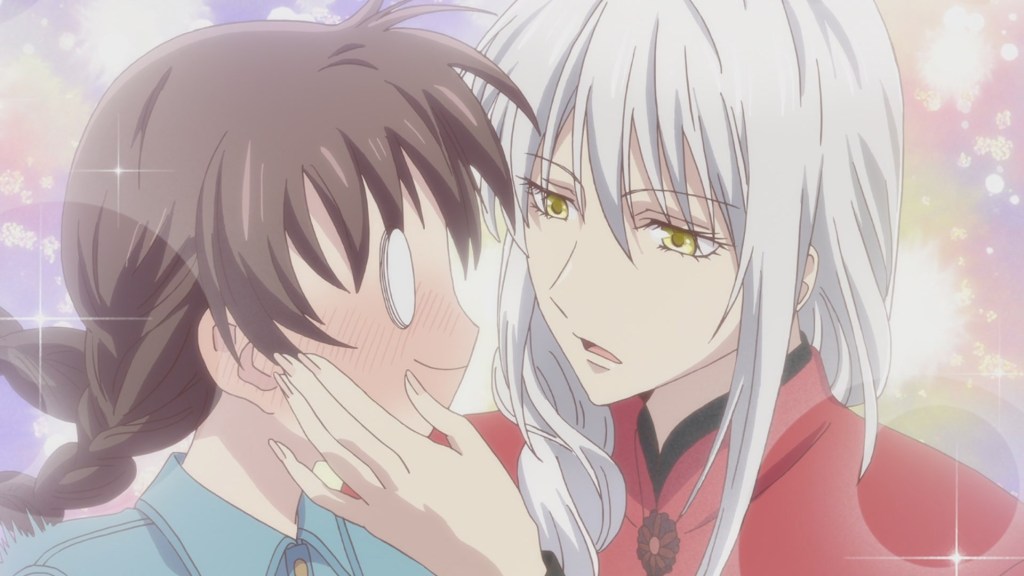
The worst one is Akito, the family head. You don’t find out until the very last episode of season two that “he” is actually a woman. Her mother “raised her as a boy,” with the excuse that the head of the family would get more respect as a man, but that was all her mother being a total sicko, threatened by any other attractive woman out there, and also having major jealousy issues regarding her deceased husband. Akito’s issues are the most severe in the family, and she takes those issues out on the other members of the Zodiac curse: playing mind games, trying to both make them miserable and then expect them to come back to her for comfort, locking Yuki in a dark room for months at a time, and so forth and so on).
Fruits Basket is already one-upping American media for that reason alone. The cross-dressers aren’t held up as normal, functioning members of society. They’re just the opposite. They’re hurt, and desperately in need of someone to come and save them. That alone makes this refreshing compared to the current attitudes in our society.
Enter Tohru Honda.
She is the perfect answer to the Zodiac curse. She loves all of them, no matter what they’ve done, what their issues are, or how mean they are to her initially. It’s a perfectly Christian attitude: love the sinner, hate the sin. And yet, this is a Japanese story, a culture where Christianity hasn’t really taken hold the way it has in other countries in the Far East. And yet, somehow, here is this Christian story being told to us. Tohru isn’t solely responsible for breaking the Zodiac curse, but she is responsible for a lot of it. She even loved Akito, who literally tried to kill her. Somehow, this girl was able to reach a hand out to a person so disgusting most of us would have considered it the “she needed killin'” defense and just shot the bitch. But Tohru didn’t. She didn’t even take the more charitable course, and just refuse to have anything to do with a hateful person. She chased Akito down and tried to extend some small amount of friendship and love to her.
And it worked.
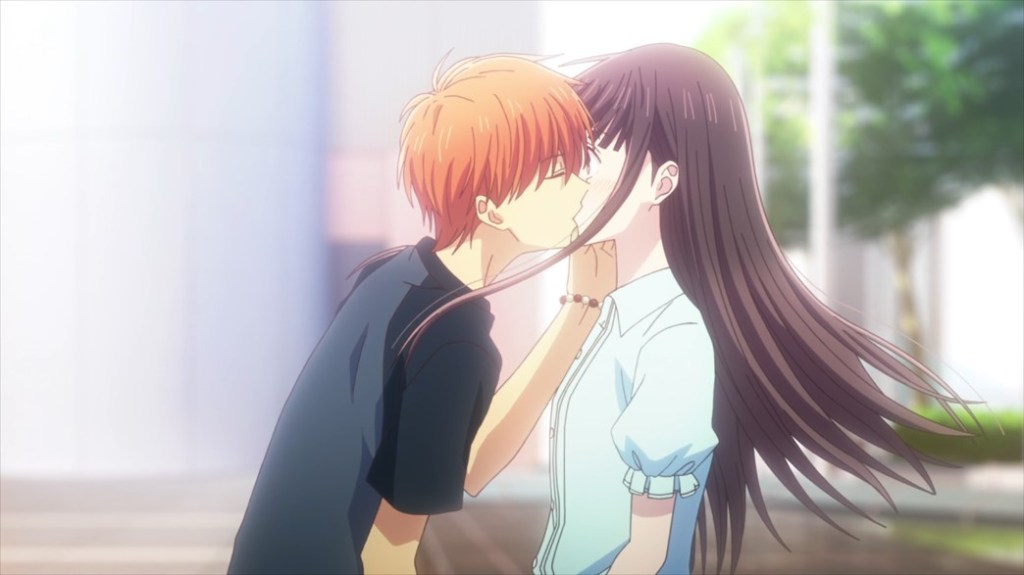
Then there’s the ending. The show has a lot of romance in it, but the main relationship you’re rooting for is Tohru and Kyo, the cat. There’s a bit of a love triangle set up at the beginning, when you can’t decide whether Kyo or Yuki is right for her, but Kyo wins, hands-down.
He’s the hated member of the Zodiac curse, because supposedly, the cat was fooled by the rat, who told him that god’s party was the day after tomorrow, not tomorrow, and the cat fell for it, and therefore was not included in the Zodiac because he didn’t attend the party. You find out at the end of the show that the story isn’t accurate; the cat was actually beloved by this god (not actual God; the Japanese culture equivalent of “a god”), but did not want to be “given eternity,” and therefore offended both god and the other animals.
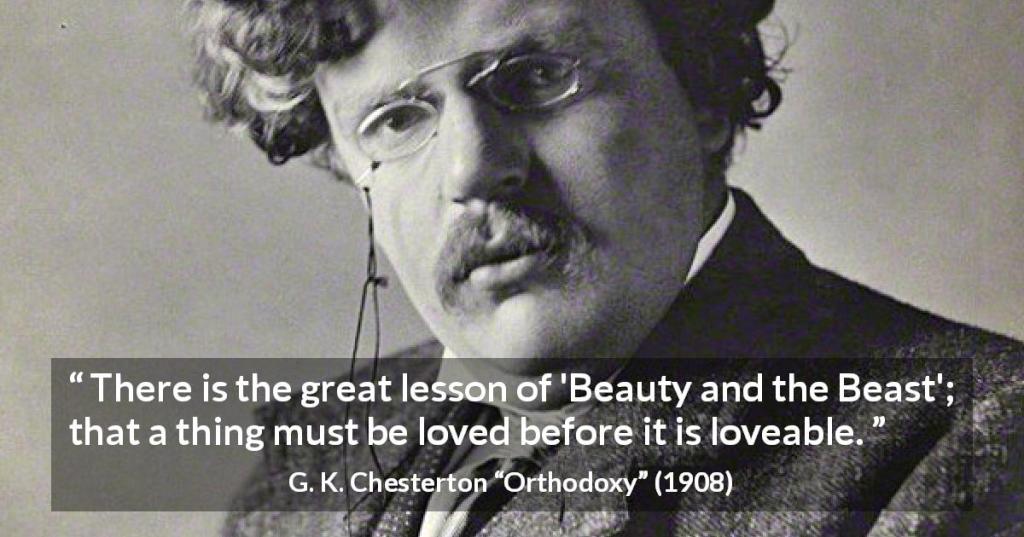
Tohru loved Kyo even when she was shown his “true form,” when his adoptive father took away the magic bracelet that kept him in human form, showing the “monster” that Kyo really was. She ran after him, and brought him home. It’s like this Japanese storyteller somehow knew (either instinctively, or because she’d read it before) about what G.K. Chesterton said: “A thing must be loved before it can become loveable.”
She even loved him when he admitted he had an opportunity to save her mother’s life, and didn’t take it. He could have pulled her away from the car that hit her, but he was so afraid of transforming into a cat when he did it (if he pulled her so hard that she bumped into him, that would have been enough to change him), that he hesitated, and she was struck by the oncoming car and killed.
Tohru reached out to him when no one else would, including himself, and loved him: the unloveable, rejected cat.
At the very end of the show, you see a small girl running through the same house the characters have been living in up to this point, and she’s carrying a small stuffed cat. She is obviously looking for someone. “Hey! Where are Tohru and Kyo?”
An adult appears in the kitchen, but you can’t see her face. “Tohru and Kyo? You’re supposed to call them ‘grandma and grandpa.'”
“But they said it was okay!”
A man with Kyo’s orange hair appears. “Grandma and Grandpa went for a walk.”
“Oh, so they’re being all lovey-dovey.”
Then the camera shows two old people walking down a garden path, but you never see their faces. It’s a woman in a kimono, and a man in an old-style Japanese robe.
Then you get a close-up of two wrinkled hands grasping each other, and an obvious wedding band. All the while you’re hearing the voice of Tohru’s mother telling her that she wishes she’ll grow old with someone and be happy (a flashback from an earlier episode).
That’s it.
Then you watch the credits, and the photographs on display on the shelves of whatever room that is includes one of a wedding photo of Kyo and Tohru. That was all you needed. It was one of the most beautiful conclusions to a love story I’ve ever seen.
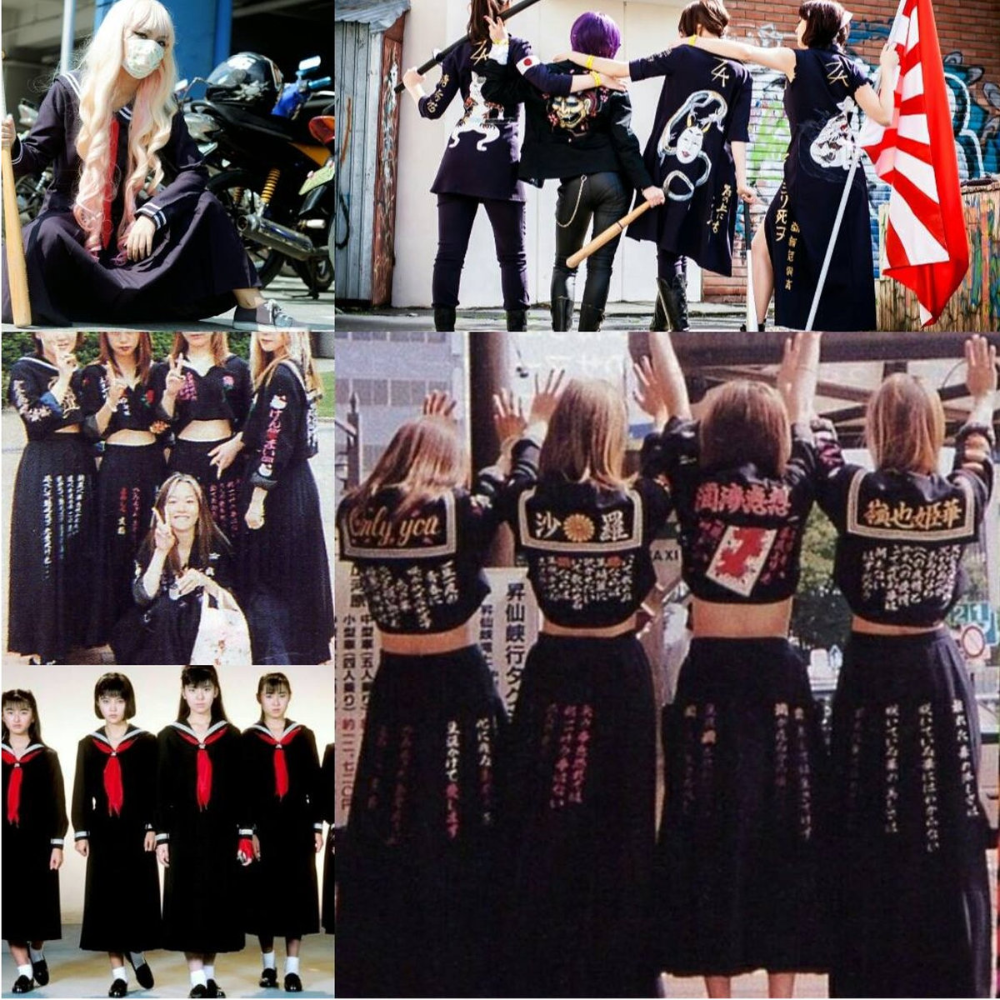
So, how does Fruits Basket teach us to write a good story? This is a prime example of how NOT to preach to an audience. There was no agenda in it. No politics, not even Japanese style. The closest you get to a societal commentary was Tohru’s friend Arisa being “a Yankee,” which is apparently a subculture in Japan (sort of the 90s Japanese version of 80s punk; see the picture here), and they are well known for marrying young and having lots of kids, but even that wasn’t more than a part of the character’s background.
The “love story” crosses all cultures, and there are basically only two versions: how will these two people overcome their dislike of each other and fall in love; or, how will these two people in love overcome the obstacles keeping them from each other. Fruits Basket is the latter, with a small bit of the former thrown in just to keep you on your toes.
In this story, the characters get a happily ever after. You don’t switch streams suddenly and decide you have to hate one of them because the author got bored and decided to make someone edgy. The whole Sohma family gets a happy ending, because one girl showed them how to love, how to overcome their dark pasts, their curse, and how to live. It’s not like the modern Star Wars sequels, where the ultimate happily-ever-after couple, Han and Leia, turns out to be cynical and divorced and their kid is a horrible bad guy.
When was the last time Americans told a story like that? Our current culture takes happy endings and destroys them as a maniacal pastime (Star Wars, and Indiana Jones, just to name some recent ones). These days, we’re up to our necks in the “agenda,” and then the “counter-cultural” side or the “non-woke” side tries to fight that, and all they put out there is crap (see my very old analysis of the movie Old Fashioned on Husband’s blog, a pathetic attempt to tell a love story that wasn’t Fifty Shades of Grey).
We seem to forget that there is so much more to the storytelling than “getting our message across.” That’s all well and good, and some people do it very well (see Declan Finn’s books for something specifically Catholic, but not those “Christian” books that only sell in Mardel’s, and then only a couple token copies a year). But there is a way for us as authors (right-wing, conservative, Christian, Catholic, you name it, anything that isn’t “normal” according to modern American opinions) to tell a story that is truly UNIVERSAL. Something that is about universal needs, desires, and problems: love, friendship, relationships, past hardship, death, and family.
Those things transcend modern social trends. They’ve been part of the human condition for thousands of years, rooted in experience, not hashtags and memes. That’s why, contrary to the left trying to utterly destroy him, Shakespeare will survive. His stories have lasted this long because they’re about universal emotions: hatred and revenge (Hamlet), a thirst for power (Macbeth), young love with interfering family members (Romeo and Juliet), bravery (Henry V), betrayal (Othello), and love conquering all (Much Ado About Nothing).
We need these stories. They’re not about what makes us DIFFERENT from each other; they’re about what makes us THE SAME, and we’re losing that sameness to the power of the modern culture. Stories like Fruits Basket can teach us how to fight in that arena. We don’t have to limit our storytelling scope to just what we are (Catholic and American, for example). That only reinforces the modern culture’s insistence that we’re all supposed to stay in our own separate boxes, whether the boxes are race, creed, education, political belief, or religion (especially when their own ideology is the closest thing to “religion” as any of them ever get, and just as unassailable by someone who disagrees with them).
I don’t want to write “Catholic fiction” or “American fiction” or “conservative fiction.” I want to write fiction that everyone in the country (or maybe even the world, if I could pull it off) would want to read. Something that speaks to the human soul, not to just Catholics, or just Christians, or just conservatives, or just Americans. That doesn’t mean that my Catholicism won’t influence what I write; I’m not saying to stop being Catholic so that you can sell books (again, see Declan Finn’s books for how an overt Catholic story can be done right and appeal to a larger audience), and I’m certainly not saying to buy into the “woke” agenda and write what they tell you to write so you can claim social credit points.
But in the Clown World that we currently live in, maybe a story about what all humans can relate to is exactly what we need. Stories where good triumphs over evil; where the heroes are heroic and admirable, not just the least evil of the options available (*cough cough* Game of Thrones).
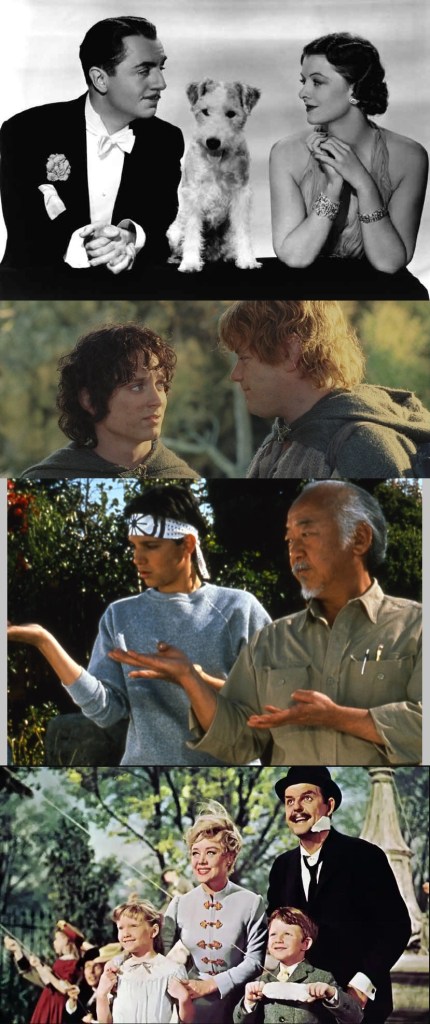
Stories where married people have fun, and actually stay married (Nick and Nora in The Thin Man). Stories where there is more love in the universe than just romantic love. There’s love between friends (Frodo and Sam), between mentor and student (Mr. Myagi and Daniel), between parent and child (Mr. Banks learning to love his children).
Because it’s ALL those kinds of love that can bring our culture out of this nose dive.
To continue the example, Tohru only loved Kyo in a romantic way; but she loved each and every one of the Sohma family members as her friends, and it was THAT love that saved them from themselves.
We need that love in our stories. Fiction changes the way people think; and that’s an intimidating power to hold. I’d rather be a storyteller for the masses, lifting them up out of this Clown World and reminding them that there is hope, than just preach to the choir. I’d rather do it so subtly that the message is hidden deep in the story, the kind that touches your heart, and then you don’t think of the details and the tie-ins and how much it can change you until you need it.
In this world, I’d rather be Fruits Basket than Old Fashioned.
 Little Squirrel Books
Thank you for posting this!
LikeLike
I have another anime to watch, I see! Thanks for the post, Lori! 😀
LikeLike
[…] Read more…. […]
LikeLike